Hatching Chicks for the First Time
And the Lessons I Learned
Spring has arrived! Though the new green grass and sweet-smelling blossoms hardly feel earned yet, I am embracing the season of new growth. With that also comes the arrival of new animal life. The first calf of the season isn’t due until the end of April, but I had the chance to help a different species into the world.

Last year, a friend asked my sister and I if we would be willing to hatch out some chicks if she provided the fertilized eggs. Our answer was an absolute yes!
Have we ever done this before? Nope.
Were we gonna let the lack of inexperience stop us from trying? No way.
Thankfully, the resources to successfully incubate and hatch chicks are nearly limitless. Lots of internet searches. Reading articles. Talking with more experienced friends. I still didn’t know everything, but I was ready to begin.
We received the eggs one Sunday after church. I had already prepped the incubator, and it was well warm by the time we made it home with the eggs.
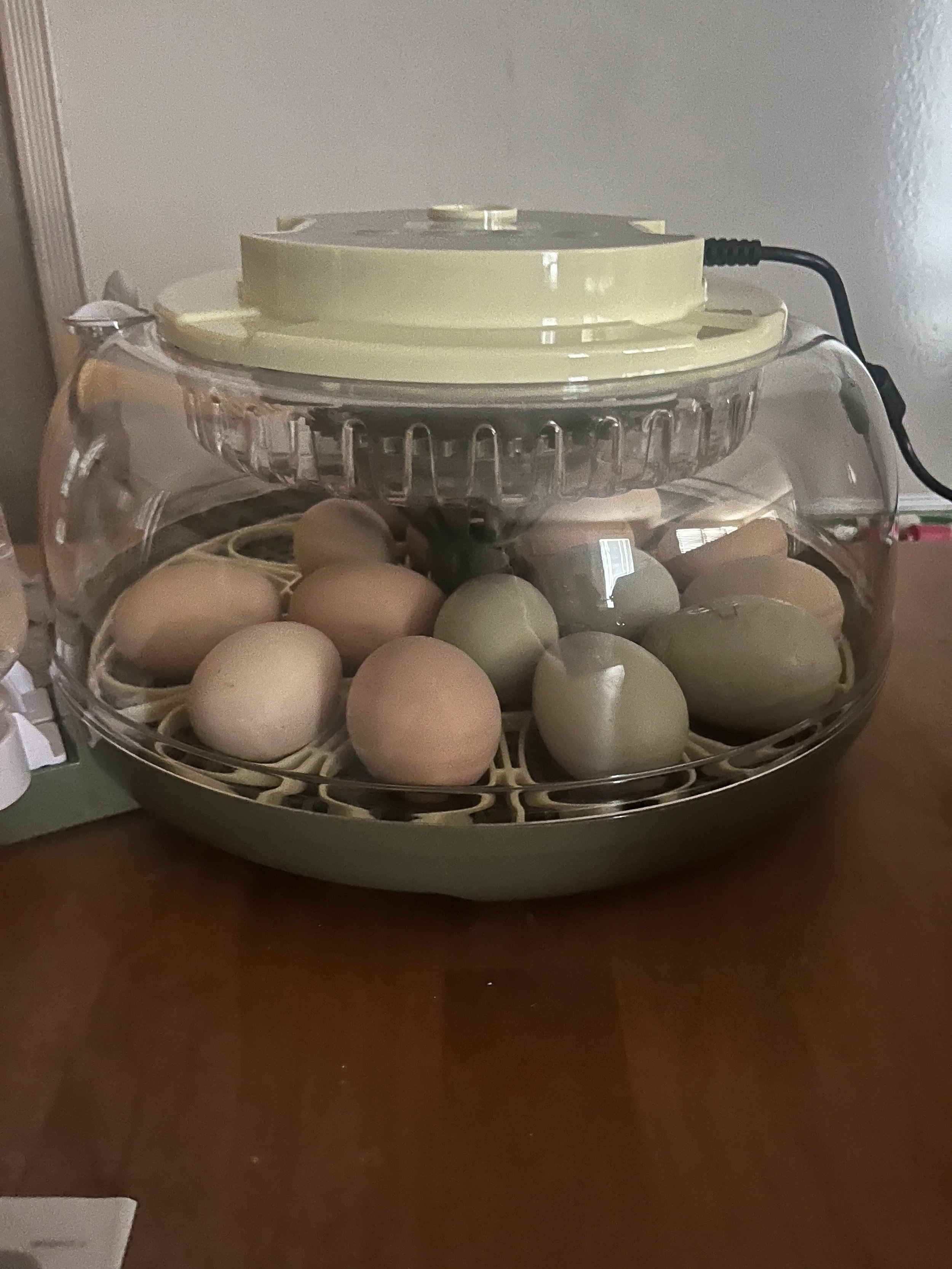
That’s when we ran into the first problem.
Since I wasn’t sure if I would be doing this again, I didn’t want to invest too much into this trial run of incubation. So I got a cheaper incubator off Amazon. It had good reviews and seemed a good fit.
Most everything worked just fine. Heat was consistent. The automatic egg turning was a great feature. But the humidity control was… well… lacking, to say the least.
I had to fill the whole bottom of the incubator just to keep the levels above 50%. Even then, I worried about the required higher levels of humidity to come later.
But that wasn’t today’s problem. Wait for Day 18.
We got to Day 5 and candled the eggs for the first time. What a thrill! We saw six developing chicks, no bigger than the size of a pinky nail, wiggling around in their embryonic state. It’s an amazing feeling to see tiny little life just beginning its journey.
We started with 15 eggs and confirmed that 6 of those were fertilized. We still left the rest in. The blue Americauna egg shells were way too thick to see through. Ever tried candling a rock? But I couldn’t bear the thought of throwing any away prematurely, so we watched and waited.
I waited too long to candle them later in their gestation, so it was a guessing game as to who would hatch. Day 21 arrived with great anticipation.
Then came the peeping! The little chicks were announcing their marathon of a hatching experience, and the first few started to pip as well.
I figured out just how little patience I have while waiting for those eggs to hatch out. It was painfully slow, but I didn’t want to jump in too soon. Gotta let the babies struggle a little bit to build the strength they need to survive in the real world.
When the first two hatched, I was elated! Those wet, floppy, exhausted little babies absolutely made my day. Not that I could breathe a sigh of relief yet. There were still more to come.
Oh yeah, and remember that humidity problem? I ended up having to make an impromptu tent with a humidifier, workout mat, and towels over the incubator. That didn’t even quite get it up to proper humidity, but I hoped and prayed just the same.
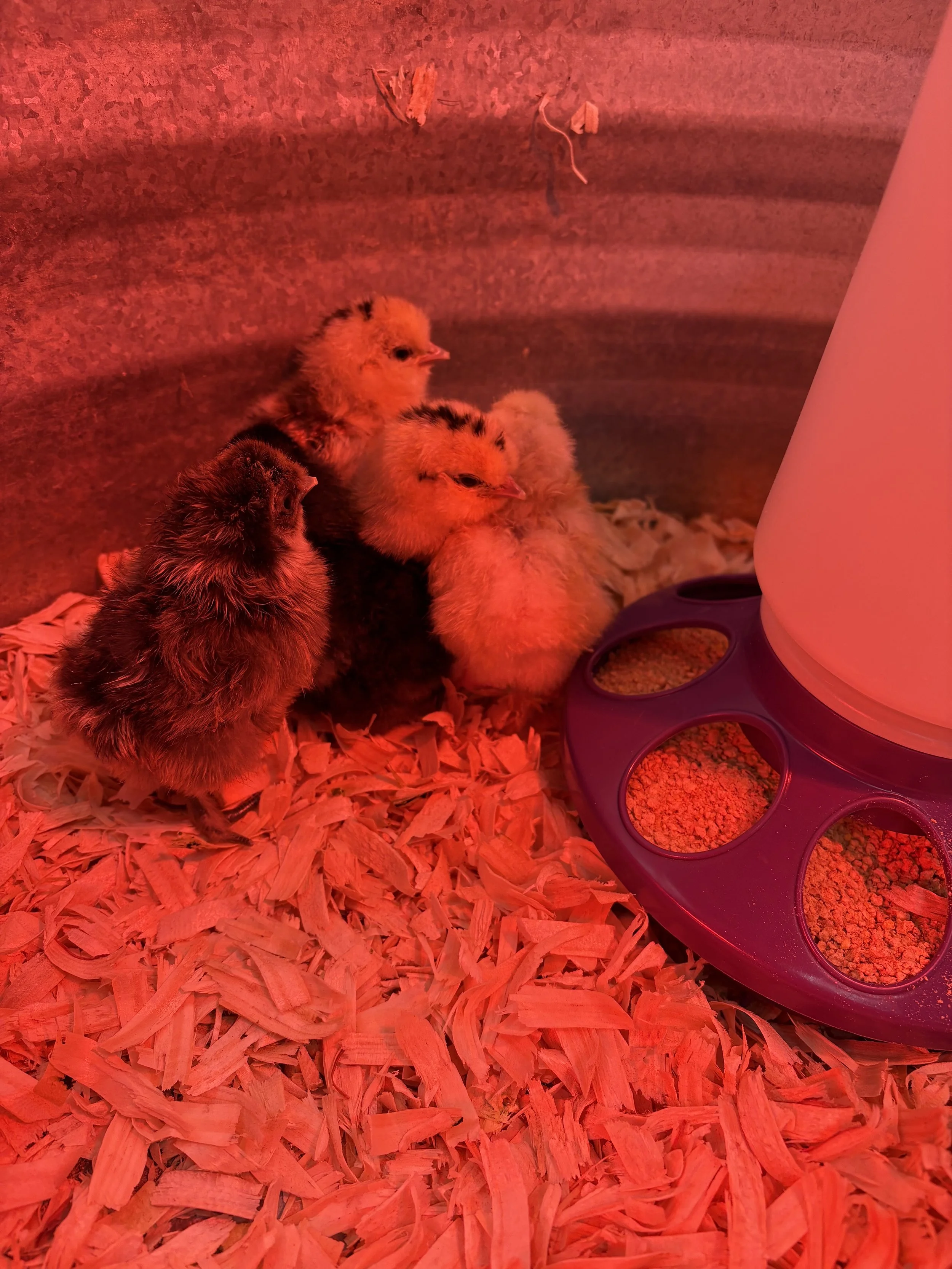
Most of the chicks did quite well getting themselves out of their shells. Even two of the rock hard blue eggs yielded fluffy little babies!
I’ll admit, too, that I did something you’re not really supposed to do. I intervened for two of the chicks. And I don’t regret it.
With the lower humidity, I was worried about the chicks being shrink-wrapped in their eggs, so I widened the opening for two who struggled for more than 24 hours (one of which I helped twice). Thankfully, they both made it okay and are wonderfully strong.
In the end, we got eight healthy little chicks (the friend wanted three, leaving us with five). Our friend’s rooster is a silkie, with hens of various kinds, so their development will be extra interesting. Many already have extra toes and feathered legs/feet like their dad. I hope they get the fluffy afro like him too.
The hatching process, though extremely stressful, was very rewarding. Seeing new life enter the world is an experience like no other. It doesn’t matter the animal species. Though I wouldn’t know yet, I think the bringing of a human into the world far surpasses that.
I was worried that I wouldn’t want to try this again, but I look forward to the next time. With the proper equipment! I’m going to invest in a better incubator. (Another friend already recommended Brinsea.)
Also next time, I want to choose the breeds. This was more of a fun experiment, a chance to try something new. But Silkie crosses aren’t exactly my first choice. These chicks are already smart and strong, so I think they’ll do quite well, but I’d like to try again with hardier breeds, aiming for a cross that serves as a thrifty homestead bird.
Something interesting I noticed: the chicks didn’t struggle with poopy butts. All others I’ve gotten from feed stores or shipped directly have had a terrible time with poop sticking to their vent. I only had to wipe one of the chicks once, and that was out of an abundance of caution. Otherwise, they pooped without problem. I wonder if the poopy butts are symptomatic of travel stress? I used different feed this time too, so maybe that was it. Either way, having no poop problems was a welcome relief.
One of the chicks (my sister named her Leeli), emerged with a weak and clubby foot. Thanks to my sister’s patient implementation of physical therapy - helping the chick practice balancing on a finger - that resolved within days. Now Leeli gets around just as well as any of them.
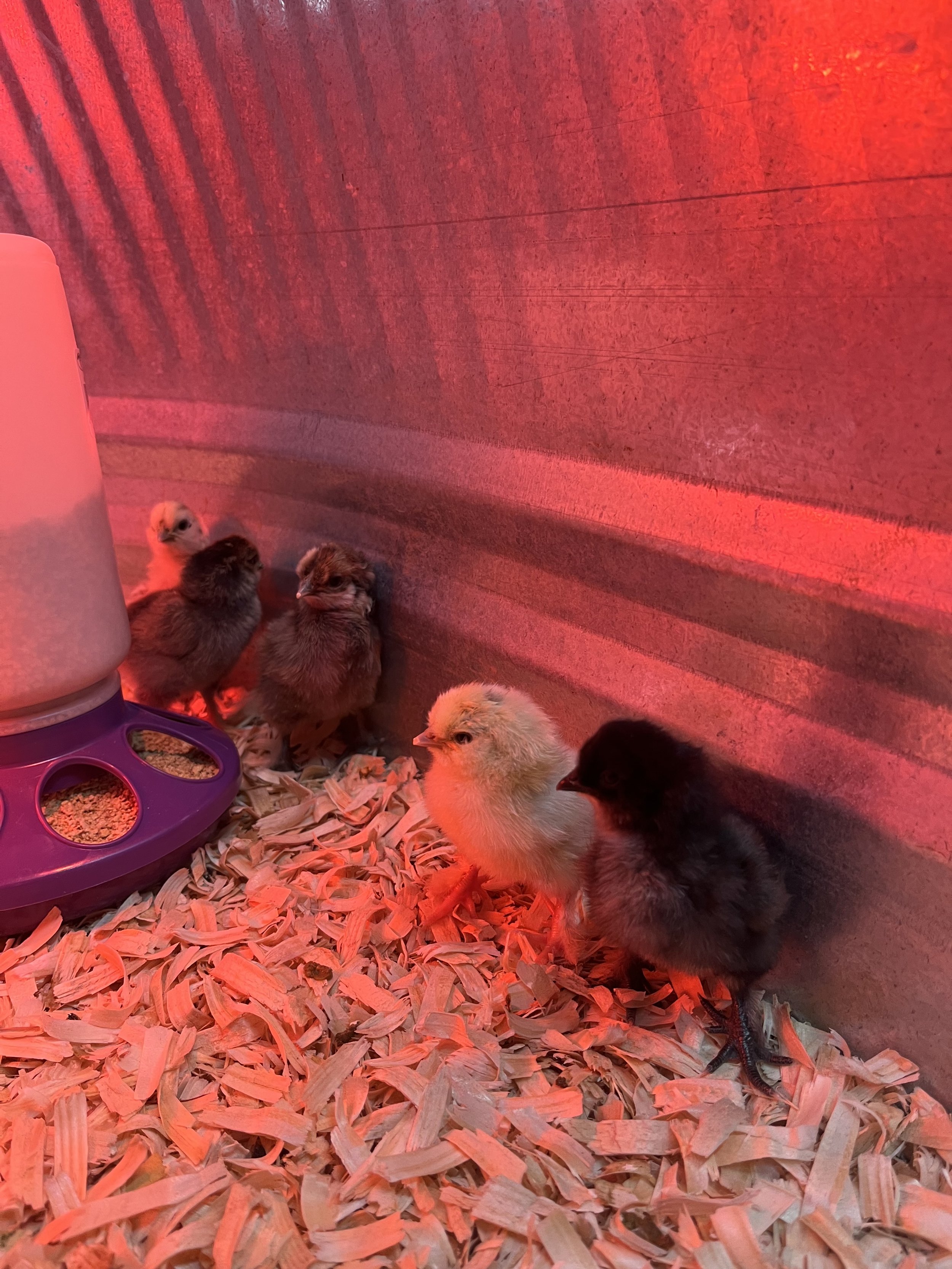
What a ride it’s been. First, 21 days of waiting followed by roughly 70 hours of nail-biting and pacing. But it was worth it. And the next time around, I look forward to implementing changes based on what I learned.
To those who want to hatch out your own chicks, I encourage you to do it. Invest in good equipment. Seek advice from experienced friends. And be prepared for some tense moments.
If a chick is struggling, don’t intervene too quickly. I waited well over 24 hours, and I was very careful so as not to trigger any fatal bleeding. Maybe it was the wrong choice, but the outcome was still good.
And don’t expect 100% success. We were happy to end up with eight, but I know we still lost a few. At least three started to pip but were nowhere near strong enough to fully hatch. It was hard, but that’s the way it goes sometimes. Learning to handle death with the proper measure of grief and hope is an important skill for anyone, homesteader or otherwise.
The result? A handful of fluffy baby chicks that grow up way too fast. And an investment that, if tended well, can last for years to come.