Senior Horse Considerations
The unfortunate truth for any animal owner is that our critters age faster than we do. So it is up to us to support our animals into their senior years. When it comes to my horses, unless it’s obvious we are a terrible fit for each other, they’re stuck with me for the rest of their lives.
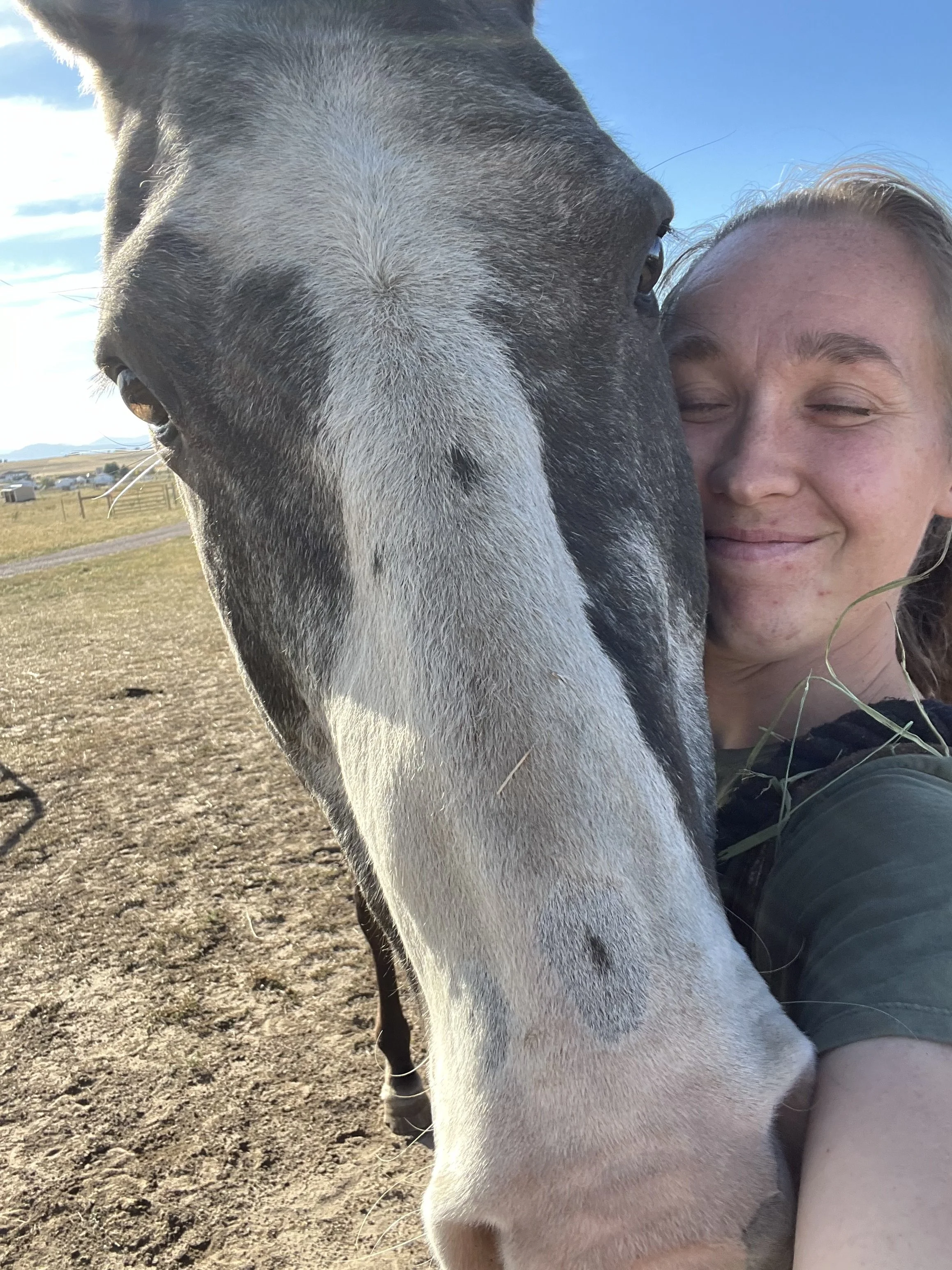
My first horse, Jet, turns 30 this year. That’s kinda a scary number for me. Yes, late twenties felt old, but 30 is a whole new level. The upper end of average lifespan. Thankfully, Jet’s still going strong, but having senior horses in my herd (a couple others in their later teens and above) forces me to have a new perspective on horse care.
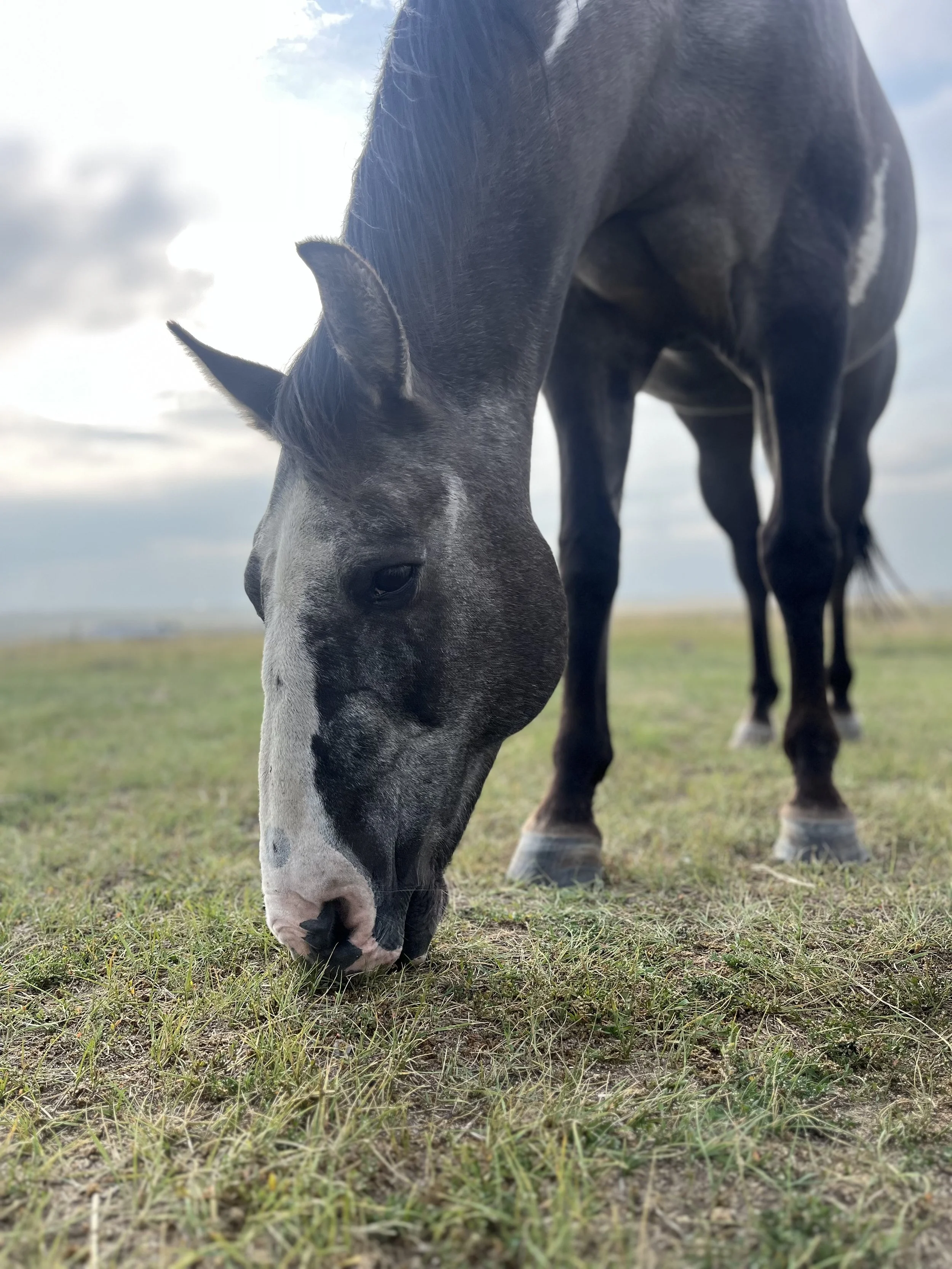
Equine senior citizens, like their human counterparts, need extra care to maintain their well-being. Their bodies are stiffer. Their teeth are lacking (or gone, in the case of some). Weight is harder to maintain. They’re more prone to age-related diseases. The list goes on.
Keeping in mind that I’m not a vet (and having a good relationship with a trustworthy one is key), here are some maintenance considerations I keep in mind in caring for my aging equines.
1. Mobility.
Arthritis is, unfortunately, natural with age. A horse’s quality of life depends on their ability to move. They were designed to be on the go, so ensuring that any horse, especially a senior one, is able to move freely is key.
Jet lives outside and has free reign of a larger pasture during the day. He is always on the go, moving from grazing areas (or his food pile in winter), to water, to shelter, to visiting neighboring horses. In addition, I provide supplements to aid in fighting inflammation and supporting his creaky joints. I’m a certified Equine Sports Massage Therapist, so I can add in some bodywork, too. In the past, I’ve also given Adequan and Legend as needed, in conjunction with a vet’s opinion.
There are many good options for supporting your horse’s joint support. If your horse is having trouble, consider consulting your vet about solutions like supplements, chiropractic care, bodywork, shockwave therapy, or even joint injections.
No matter what, remember that motion is lotion. Unless your horse needs to be on stall rest, it’s much better for them to be moving outside as much as possible. Movement helps promote good blood flow and fight inflammation. Don’t fight the horse’s design; work with it.
2. Metabolism.
Aged horses often develop related metabolic issues, such as Cushing’s, which need proper intervention. I like to test Jet’s ACTH and Insulin levels at least once a year. Thankfully, his sugar-processing ability has never been an issue for him. However, should his blood or clinical appearance indicate metabolic disease, I am prepared to give him support with herbals or prescribed medications like pergolide. Again, a conversation for your vet should you start to suspect metabolic trouble.
Should a horse have insulin troubles, it’s also highly important to remember to keep a close eye on the horse’s diet. Excess sugars could trigger catastrophic problems, like founder. Low sugar forage options like soaked or teff hay can help mitigate the problem. When soaking hay, I like to leave it in warm/hot water for at least 30 minutes, closer to an hour if the water is colder.
Check the label on your horse’s feed too. If you’re using a senior, remember that many of them are high in their sugar content. Thankfully, there are also plenty of low sugar options which are readily available at most local feed stores.
3. Teeth/Weight Management
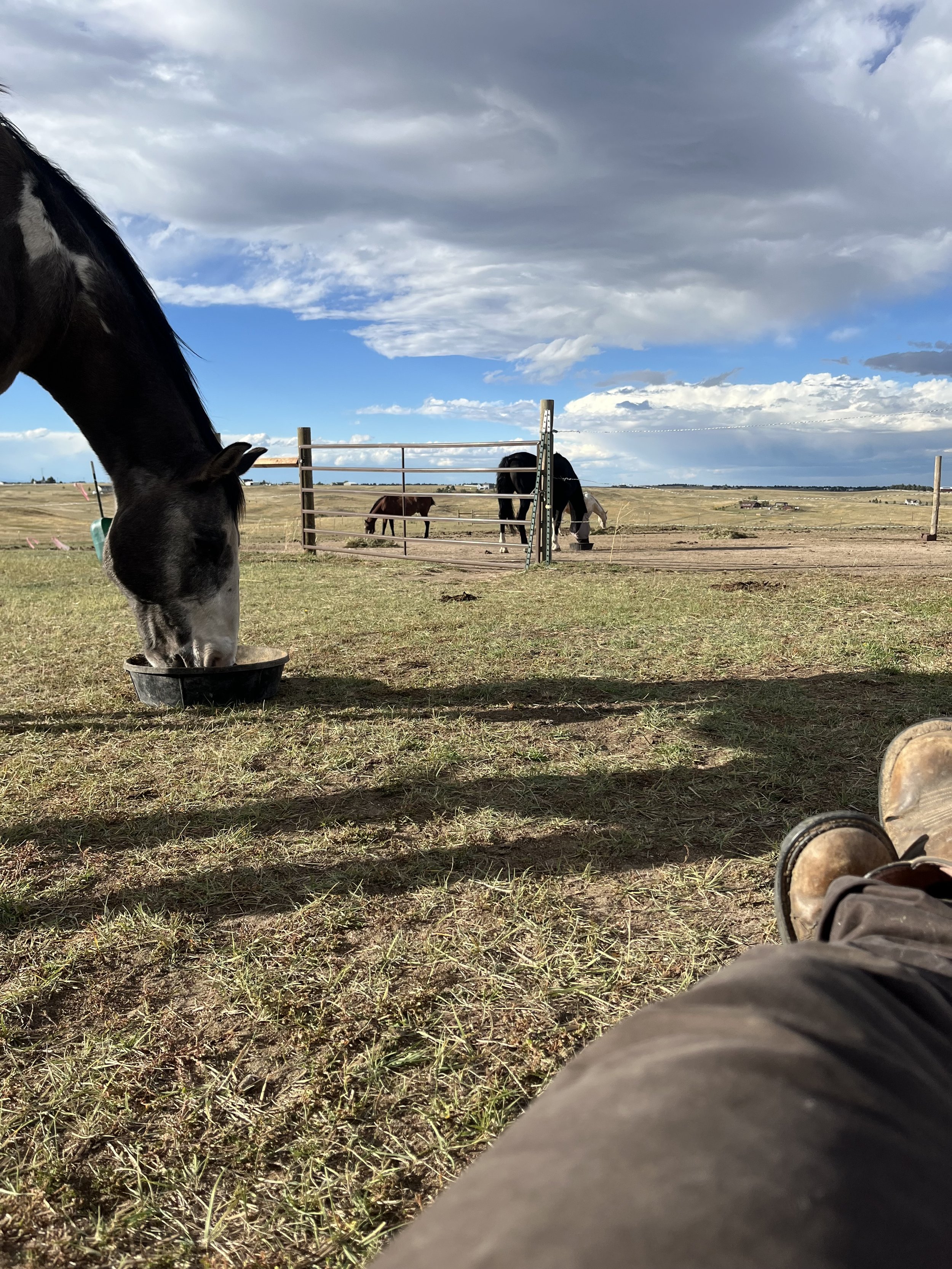
As a horse’s teeth decay with age, it often becomes harder to maintain weight. While Jet has good teeth for his age, I still give him soft foods as a supplement to his hay. He gets a few mashes throughout the day, which not only deliver his supplements but add to the mass of his food intake. While he does get some senior, I also make the base mainly forages, such as timothy and alfalfa pellets. When he’s not getting his forage from pasture, I also give him soaked timothy hay cubes that are easier for him to chew.
Dental exams are highly important for any horse. Get your horse checked by a dentist every 6-12 months, depending on your horse’s mouth and needs. Dentals not only address unevenness in teeth’s surfaces, but also any abnormalities such as a broken or rotten tooth. Any irregularities in the teeth can impact their ability to chew properly, thus leading to weight loss.
4. Quality of Life
The dark part of animal ownership. The day will come when we must say goodbye. While I hope for as long as possible with my horses, I also keep in mind that they can’t live forever, and it is up to me to make the merciful decision when that day comes.
This can be different for everyone. I wouldn’t tell anyone how long to keep supporting their horse. As their owner, you know them best. You know when their quality of life is no longer sustainable.
I’ve seen the results of limping a horse along until they’re only a shell of who they used to be. I can’t do that to my horses. So I have a set of conditions in my mind that will help me make the decision when the sad day does come.
Can he get around well? If he’s struggling to move for normal behaviors, like eating and drinking, then his quality of life is diminished.
Is his pain manageable? So long as it is with conventional methods - herbal or medicinal - I’ll keep supporting him and keeping him comfortable.
Is he keeping weight on? If his feed intake does not support his energy output, his body will start to cannibalize itself for nutrients.
Is he still interested in feed? Lack of interest in feed can indicate an overall apathetic approach to life.
Is there life in his eyes? This one’s more subjective. Again, it’s up to you to know your own horse better than anyone else. If they lose that spark and can’t get it back, it may be time to consider the hardest decision.
I’m blessed to have a wonderful relationship with a group of vets. They all care for my animals and respect me enough to be gently honest with me. It helps to have that outside opinion. While I am emotionally attached and may be too close to my animals to sometimes see the truth, an outside professional can step in and give me their opinion.
I love Jet. He’s been a part of my family for a long time now, and he’s one of my oldest friends. I want to provide him, and the rest of my herd, with the best care possible. I will cherish every moment I get with them, and I will listen to what their eyes say. Horses are excellent communicators, if you know how to slow down and listen.
Kind of a morbid way to end, but even in death, there is hope. I firmly believe that every creature is important to God. He made them, after all.
A vet friend of mine shares with her clients that, if heaven is a perfected earth, then the Lord must fill it with His creation, and that seems to include the animals His people have loved so much here. While the Bible doesn’t address this, I tend to agree. If Jesus returns riding on a horse, He’s gotta get that horse from somewhere!
“Are not two sparrows sold for a penny? Yet not one of them will fall to the ground outside your Father’s care.” (Matthew 10:29, NIV)
P.S. Here’s a helpful article that goes into more detail about senior horse management.